In my continued efforts to try to keep the class engaging, on task, and open for exploration, while also trying to build in enough time for all students to learn the necessary concepts at their own (reasonable) pace, I am trying yet another experiment. This experiment is driven by the concept that our time at ECTS is for preparing for our life after high school (careers), even though many students within the same class will end up seeking very different careers.
One of my largest struggles in my young teaching career has been keeping all students “on task”, and I frequently find myself telling students “be productive”, despite the fact that they have completed all expected (or assigned) work from me. The issue that surfaces is that good, quality work should not necessarily be “punished” by just giving more work without consideration for the student’s interest. It is also difficult to offer custom assignments/activities tailored specifically to their interests, and individual lessons to advance the curriculum can be time consuming and leave other students without guidance in their own step of the curriculum. This is where the career wall, portfolios, personal projects, and tutorials all come in to play.
The idea behind the career wall is to build a tiered system of activities that can be done by an individual, with limited guidance, that can still help them to push forward in their career goals. Additionally, by putting information on the wall it gives me quick reference for possible activities/redirection for students, that aligns with commitments they have made themselves. It also gives me a quick place to put a post it note and mark a student for loss of professionalism points on the day, should that become necessary.
The career wall consists of a list of all students names printed largely, beneath the name, the words “After graduation” and then two columns “Target Career” and “Personal Project”. (See template below. It has the general rules and an editable table for the names, etc.)
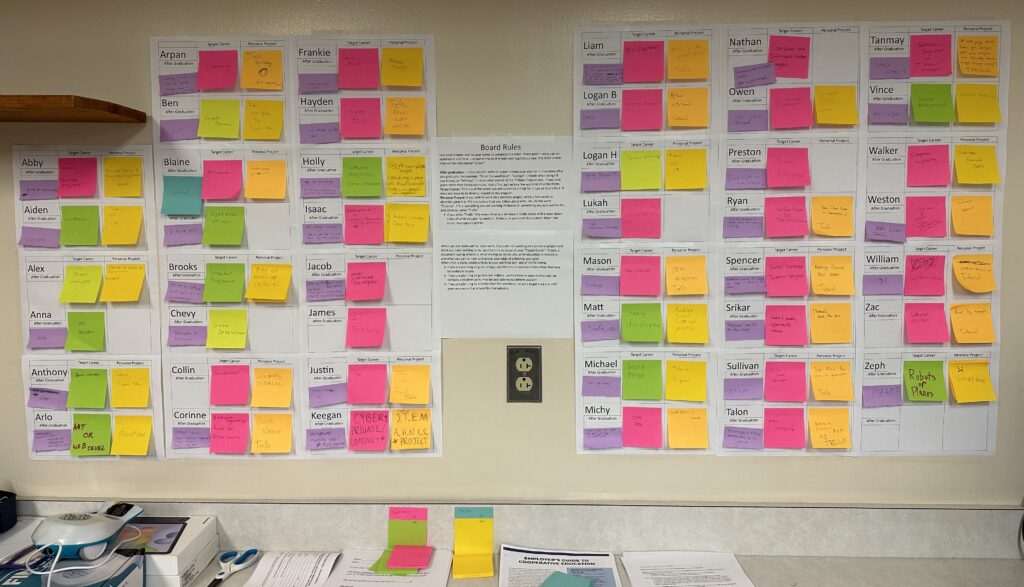
The area under the name, “After Graduation” is for the student to enter on a small post it what they plan to do immediately (within a year) after they graduate. Like all areas, this can be edited at any time. Here are examples of possible entries from the instructions to the students: “Enter the workforce”, “College” (Include what college if you know), or “Military” (Include what branch of the military if you know)…If you have plans other than those examples, that’s fine, just write a few words about it.
The first column next to the name is for the student’s current target career, this can be changed at any time. Should the student be in a situation where he/she says “I have nothing to do”, they can research their target career and create an info sheet for an online article in their portfolio (such as this: I.Trost Career Research ). This article can serve as a reference for focusing on what can be done now.
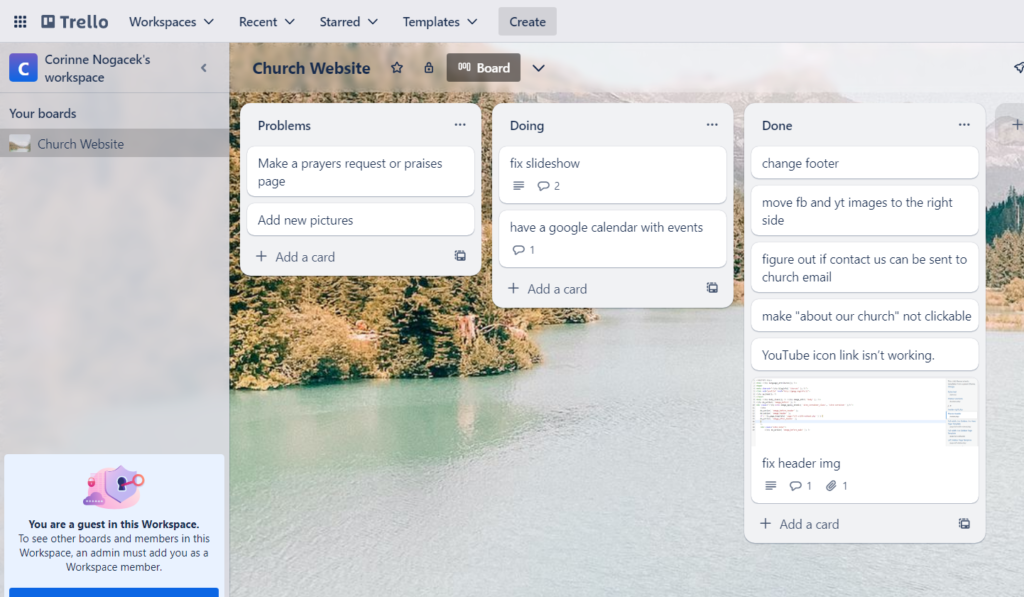
The second column is for a project/concept that may not be part of the curriculum that the student wishes to look into further. If the student chooses to follow along with a tutorial (eg. a video or stepped out procedure), then they write the topic and the word “Tutorial”. If the student chooses to do work from scratch (their own idea), then they write out the general idea and the word “Trello”, which means they will have a trello project management board with the immediate steps broken down into manageable, measurable pieces.
What this framework is allowing me to do is back off a bit on “busy work” in favor of focusing on delivering the students more quality content and time to work on it. Then my focus on many “work days” turns to managing professionalism and offering support in each individual student’s learning journey, whether it be on the content we are covering or the personal projects they are taking on.
This system has also afforded me a quick snapshot into each student’s goals for the future at any time, which allows for more conversation about preparing for that future and better knowledge of each individual student.
This is now the tiered system of work in the class, easily enforceable by the board:
When done with all assignments. Remain quiet and do one of the following:
- Help others – pull up the help board: CMP Help Board
- Work on a personal project/tutorial (see class board):
- If not following a tutorial, use trello (https://trello.com/) to break down your goals and document progress. Be prepared to show your board when asked.
- If following a tutorial, create a post in your online journal and document your progress/what you learned and worked through.
- Research your target career: Career Info Sheet and Reflection
- Once the document is completed, adapt it to be an article in your online portfolio – categorized as career research
- When that is complete, do the same for another career you may be interested in.
- Do one of the following, document the work and save it in your portfolio:
- If you are planning to go to college, use the time to explore scholarships that may be available to you.
- If you are planning to go into the military, use the time to explore what sign up bonuses and other perks may be available to you before you join.
- If you are planning to directly enter the workforce, select a target area and create/edit your resume so that it best fits that industry.
- Add a journal entry (blog post) to your online portfolio about anything that interests you.
At this point, the area I need to work on most in myself is enforcing a consistent professional environment, but it is my hope that this framework is a formula for success in my efforts to improve myself, the students, and the classroom envirnoment.